 |
Hongri Gong |
|
Gender: male Department: Biochemistry and Molecular Biology Tel: Office Location: Biology Building, School of Life Sciences Career: Professor Major: Biochemistry and Molecular Biology,Microbiology,Cell Biology Email: gonghr@nankai.edu.cn Address: 94 Weijin Road, Nankai District, Tianjin 300071, China |
ResumeDistinguished and Second-Level Professor at Nankai University, Doctoral Supervisor. His research focuses on frontier fundamentals and innovative applications of the oxidative phosphorylation system.He has received funding from the National Excellent Young Scientists Fund, National Key R&D Program Young Scientist Project, Ministry of Education U40 Program, National Distinguished Young Scientists Fund, and National Basic Research Talent Program.He has published as corresponding or first author in Nature, Science, Molecular Cell, Nature Communications, PNAS, and eLife.He serves as Director of the Tianjin Key Laboratory of Protein Science and President of the Tianjin Society of Biochemistry and Molecular Biology. He is also a reviewer for Nature, Nature Chemical Biology, Nature Communications, and PNAS, and an evaluation expert for the National Natural Science Foundation of China and the National Key R&D Program.
EducationHe earned his B.S. from Jiangxi Agricultural University, M.S. from Zhejiang University, and Ph.D. from Nankai University.
WorkExperienceDec 2021 – Present ProfessorJul 2019 – Dec 2021 Associate Professor
Research FieldsLaboratory of Energy Biology & Oxidative Phosphorylation
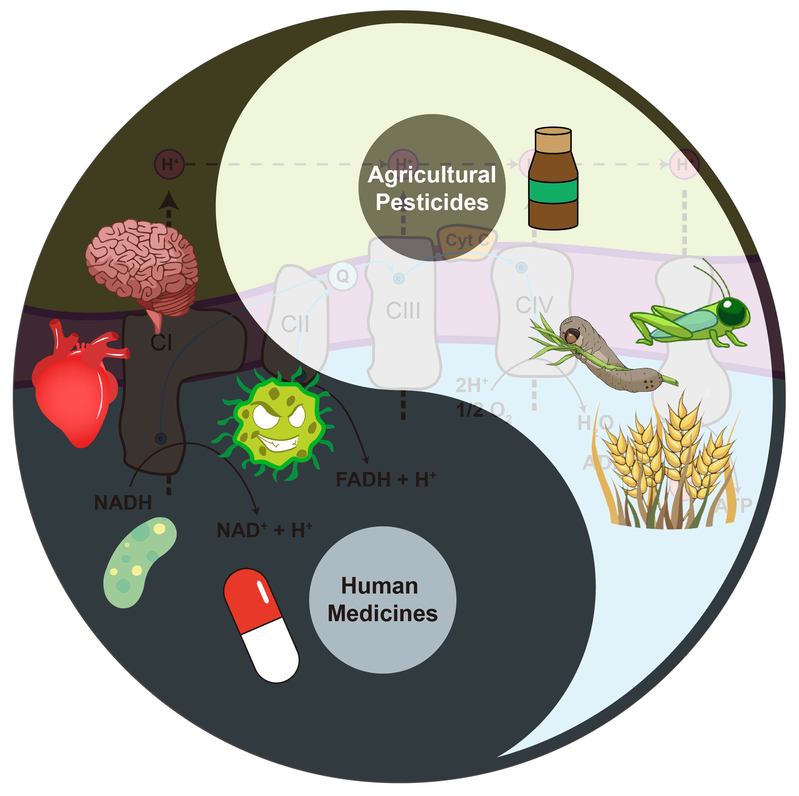
Our laboratory leverages an interdisciplinary platform integrating structural biology, artificial intelligence, synthetic biology, and drug design and synthesis. We are dedicated to the in-depth elucidation of molecular mechanisms underlying the oxidative phosphorylation system and advancing its translational applications in targeted drug development. Research Direction 1: Frontier Exploration and Theoretical Innovation in Bioenergetic Metabolism Mechanisms Energy metabolism is the core driving force of life activities, and elucidating its mechanisms is key to understanding the essence of life. This direction focuses on the core energy conversion process of oxidative phosphorylation, dedicated to revealing the deep laws and regulatory networks of energy metabolism. It provides theoretical foundations for mechanism interpretation of related diseases and drug target discovery, driving paradigm innovation in the field of energy biology. Research Direction 2: Elucidation of Energy Metabolism Mechanisms in Pathogens such as Mycobacterium tuberculosis and Targeted Drug Development The drug resistance of Mycobacterium tuberculosis and other pathogens is becoming increasingly severe, with traditional targets nearly exhausted. Pathogens rely on unique energy metabolic pathways for survival within the host, which differ significantly from those of the host, making them ideal drug targets. This direction aims to elucidate the energy metabolism mechanisms of pathogens and develop targeted anti-infective drugs, providing new strategies for combating drug-resistant bacterial infections. Research Direction 3: Elucidation of Energy Metabolism Mechanisms in Major Agricultural Pests and Diseases and Green Pesticide Development The excessive use of chemical pesticides has led to environmental pollution and escalating resistance, making the development of green pesticides urgent. Energy metabolism is an essential process for the survival and reproduction of pests and diseases, and differs from that of higher organisms. This direction elucidates the energy metabolism mechanisms of agricultural pests and diseases to guide rational design of green pesticides, providing technical support for ensuring food security and sustainable agricultural development. Research Direction 4: Elucidation of Mitochondrial Energy Metabolism Mechanisms in Cardiovascular and Cerebrovascular Diseases and Pharmacological Intervention Cardiovascular and cerebrovascular diseases such as myocardial ischemia-reperfusion injury and neurodegenerative diseases seriously threaten human health, with mitochondrial dysfunction as their common pathological basis. As the core organelle of energy metabolism, mitochondrial damage leads to energy crisis and cell death. This direction focuses on the mechanisms of mitochondrial energy metabolism disorders and explores pharmacological intervention strategies, opening new avenues for the prevention and treatment of cardiovascular and cerebrovascular diseases. AchievementMore details could be found by visiting http://orcid.org/0000-0002-2596-7635 July 2024 – Published a research article titled Inhibition of M. tuberculosis and human ATP synthase by BDQ and TBAJ-587 in the top international journal Nature. For the first time internationally, we determined the high-resolution cryo-EM structures of Mycobacterium tuberculosis ATP synthase bound to BDQ and its derivative TBAJ-587, as well as the human ATP synthase bound to BDQ. We elucidated the molecular mechanisms by which BDQ and TBAJ-587 inhibit M. tuberculosis ATP synthase, and revealed their cross-reactivity mechanisms with human ATP synthase. These findings provide important guidance for developing next-generation highly selective anti-tuberculosis drugs. https://doi.org/10.1038/s41586-024-07605-8 June 2023 – Published a research article titled Structure of the human ATP synthase in the renowned journal Molecular Cell. We were the first internationally to report the high-resolution cryo-EM structures of human ATP synthase in four distinct conformations, further advancing our understanding of the rotary catalytic mechanism during ATP synthesis/hydrolysis. Additionally, we analyzed the molecular pathogenic mechanisms of related clinical mutations, finding that reported mutations predominantly occur at subunit interfaces, affecting complex structural stability, thus providing new insights for disease understanding and treatment. The structural elucidation of human ATP synthase will lay the foundation for developing anti-tuberculosis and anti-tumor drugs with improved targeting and fewer side effects. https://doi.org/10.1016/j.molcel.2023.04.029 April 2023 – Published a research article titled Structure of the human respiratory complex II in the renowned journal PNAS. We determined the high-resolution cryo-EM structure of human mitochondrial respiratory chain complex II, elucidated its structural features, and proposed an electron transfer mechanism. We also analyzed the molecular pathogenic mechanisms of related clinical mutations, finding that reported mutations affect complex structural stability, providing new insights for disease understanding and treatment. This study will also lay the foundation for developing anti-tuberculosis and anti-tumor drugs with improved targeting and fewer side effects. https://doi.org/10.1073/pnas.2216713120 November 2021 – Published a research article titled Structure of Mycobacterium tuberculosis cytochrome bcc in complex with Q203 and TB47, two anti-TB drug candidates in the renowned journal eLife, elucidating the molecular mechanisms by which anti-tuberculosis drug candidates Q203 and TB47 exert their specific bactericidal functions. These findings will greatly promote further optimization of the aforementioned candidate drugs and the development of more effective novel anti-tuberculosis drugs. https://doi.org/10.7554/eLife.69418 July 2021 – Published a research article titled Cryo-EM structure of mycobacterial cytochrome bd reveals two oxygen access channels in the renowned journal Nature Communications. We determined the high-resolution cryo-EM structure of Mycobacterium smegmatis cytochrome bd complex and proposed a novel catalytic mechanism coupling quinol oxidation with oxygen reduction. https://doi.org/10.1038/s41467-021-24924-w April 2021 – Published online a research article titled Architecture of the mycobacterial succinate dehydrogenase with a membrane-embedded Rieske FeS cluster in the renowned journal PNAS. We determined two high-resolution cryo-EM structures of Mycobacterium smegmatis respiratory chain complex succinate dehydrogenase (Sdh1) in its native state and substrate-bound state, providing a structural basis for anti-tuberculosis drug development. https://doi.org/10.1073/pnas.2022308118 October 2018 – Published a research article titled An electron transfer path connects subunits of a mycobacterial respiratory supercomplex in the top international journal Science. We determined the high-resolution cryo-EM structure of the Mycobacterium smegmatis respiratory chain supercomplex III₂IV₄SOD₂, revealing a novel electron transfer mechanism in living organisms coupling quinol oxidation with oxygen reduction. Furthermore, through structural biology studies, we discovered for the first time that superoxide dismutase directly participates in the assembly of the respiratory chain oxidoreductase supercomplex and works cooperatively. http://doi.org/10.1126/science.aat8923 Social Appointments- Director of the Biochemistry and Molecular Biology Society of Tianjin - Member of the Microbiology and Immunology Branch of the Medical Association of Tianjin - Member of the Tianjin Infectious Disease Epidemic Risk Assessment Expert Group - Member of the Seventh Committee of the Tianjin Nankai District Youth Federation - Member of the Youth Council of the Chinese Anti - Tuberculosis Association - Member of the Basic Committee of the Chinese Medical Association of Tuberculosis Teaching Experience《The Deadly Enemy》 Undergraduate general education elective course focusing on scientific understanding and prevention strategies of deadly threats such as pathogenic microorganisms and infectious diseases.
Honor Title2026 National New Era Youth Pioneer Award 2026 Nankai University Distinguished Research Award 2025 Nankai University Good Teacher and Helpful Friend Top Ten Award 2024 Nankai University Outstanding Educator Award 2024 Nankai University Outstanding Class Advisor Model 2023 Nankai University Youth May Fourth Medal Recipient 2019 Ray Wu Prize 2018 First Tianjin Youth Innovation Talent Award |
|
|
|
45 Access |