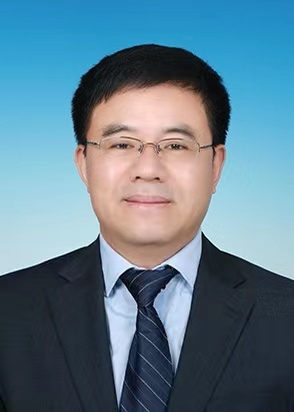
 |
Liulin |
|
Gender: male Department: 遗传学和细胞生物学系 Tel: 022-23500752 Office Location: Room C301 Biology Station https://liulin.nankai.edu.cn/(Laboratory webpage link) Career: Professor Major: Cell Biology Email: liulin@nankai.edu.cn Address: Room C301, Biology Station, Nankai University, Weijin Road, Nankai District, Tianjin City |
ResumeProfessor Liu Lin obtained his Ph.D. from China Agricultural University in 1993. He conducted postdoctoral research at the Babraham Institute (Cambridge, UK), Cornell University, University of Connecticut, and Brown University (USA). Since 2007, he has been working at Nankai University. His research focuses on the roles and regulatory mechanisms of telomeres and heterochromatin in pluripotency maintenance, somatic cell reprogramming, tumorigenesis, and cancer recurrence, as well as the mechanisms of ovarian aging and novel strategies to counteract it.
He has led numerous national-level major research initiatives, including the National Key R&D Program, National Major Basic Research Program (973 Program), National Major Transgenic Project, National International Science and Technology Cooperation Program, and key projects and major research plans under the National Natural Science Foundation of China (NSFC).
Professor Liu has received several awards, including the First Priz
Education1. 1980–1984, Jiangxi Agricultural University, Bachelor of Science in Animal Science
2. 1984–1987, Jiangxi Agricultural University, Master of Science in Animal Physiology and Biochemistry
3. 1990–1993, China Agricultural University, Doctor of Philosophy in Animal Reproduction and Biotechnology
WorkExperience1. 1994–1996, Babraham Institute, Cambridge, Visiting Scholar
2. 1996–1998, Cornell University and University of Connecticut, Postdoctoral Fellow
3.1998–2004, Brown University, Assistant Professor
4. 2003–2007, Sun Yat-sen University, Professor
5. 2007–present, Nankai University, Professor
Research Fields1.New pathways and mechanisms for telomere regulation of stem cell senescence and regeneration. 2.New strategies for ovarian aging mechanisms and interventions. AchievementRepresentative Publications1. Guo RP, Ye XY, Yang J, Zhou ZC, Tian CL, Wang H, Wang HY, Fu HF, Liu C, Zeng M, Yang J & Liu L. Feeders facilitate telomere maintenance and chromosomal stability of embryonic stem cells. Nature Communications. 9(1):2620 (2018). 2. Zhou Z, Wang L, Ge F, Gong P, Wang H, Wang F, Chen L, Liu L. Pold3 is required for genomic stability and telomere integrity in embryonic stem cells and meiosis. Nucleic Acids Res. 46(7):3468-3486(2018). 3. Wang H, Zhang K, Liu Y, Fu Y, Gao S, Gong P, Wang H, Zhou Z, Zeng M, Wu Z, Sun Y, Chen T, Li S, Liu L. Telomere heterogeneity linked to metabolism and pluripotency state revealed by simultaneous analysis of telomere length and RNA-seq in the same human embryonic stem cell. BMC Biol. 15(1):114(2017). 4. Ming Zeng, Xiaoyan Sheng, David L. Keefe & Lin Liu. Reconstitution of ovarian function following transplantation of primordial germ cells. Scientific Reports 7:1427 (2017) 5. Yang J, Guo R, Wang H, Ye X, Zhou Z, Dan J, Wang H, Gong P, Deng W, Yin Y, Mao S, Wang L, Ding J, Li J, Keefe DL, Dawlaty MM, Wang J, Xu G, Liu L. Tet enzymes regulate telomere maintenance and chromosomal stability of mouse ESCs. Cell Reports 15:1809-1821 (2016). 6. Zhang H, Panula S, Petropoulos S, Edsgard D, Busayavalasa K, Liu L, Li X, Risal S, Shen Y, Shao J, Liu M, Li S, Zhang D, Zhang X, Gerner RR, Sheikhi M, Damdimopoulou P, Sandberg R, Douagi I, Gustafsson JA, Liu L, Lanner F, Hovatta O, Liu K. Adult human and mouse ovaries lack DDX4-expressing functional oogonial stem cells. Nature Medicine 21:1116-1118 (2015). 7. Chen H, Guo R, Zhang Q, Guo H, Yang M, Wu Z, Gao S, Liu L, Chen L. Erk signaling is indispensable for genomic stability and self-renewal of mouse embryonic stem cells. Proc Natl Acad Sci USA. 112: E5936–E5943 (2015). 8. Sung LY, Chang WF, Zhang Q, Liu CC, Liou JY, Chang CC, Ou-Yang H, Guo RP, Fu HF, TK Cheng, Ding ST, Chen CM, Okuka M, Keefe DL, Chen YE, Liu L, Xu J. Telomere elongation and naive pluripotent stem cells achieved from telomerase haplo-insufficient cells by somatic cell nuclear transfer. Cell Reports 9:1603–1609 (2014). 9. Dan J, Y Liu, N Liu, M Chiourea, M Okuka, T Wu, X Ye,C Mou, LWang, LL Wang, Y Yin, J Yuan, B Zuo, F Wang, Z Li, XPan, ZYin, L Chen, DL Keefe,S Gagos, A Xiao, Liu L. Rif1 maintains telomere length homeostasis of ES cells by mediating heterochromatin silencing. Developmental Cell 29: 7–19 (2014). 10. Yuan J, Zhang D, Wang L, Liu M, Mao J, Yin Y, Ye X, Liu N, Han J, Gao Y, Cheng T, Keefe DL, Liu L. No evidence for neo-oogenesis may link to ovarian senescence in adult monkey. Stem Cells 31:2538-2550 (2013). 11. Wang F, Pan X, Kalmbach K, Seth-Smith ML, Ye X, Antumes DM, Yin Y, Liu L, Keefe DL, Weissman SM. Robust measurement of telomere length in single cells. Proc Natl Acad Sci USA. 110:E1906-1912 (2013). 12. Jiang J, Lv W, Ye X, Wang L, Zhang M, Yang H, Okuka M, Zhou C, Zhang X, Liu L, Li J. Zscan4 promotes genomic stability during reprogramming and dramatically improves the quality of iPS cells as demonstrated by tetraploid complementation. Cell Research 23:92-106 (2013). 13. Liu M, Yin Y, Ye X, Zeng M, Zhao Q, Keefe DL, Liu L. Resveratrol protects against age-associated infertility in mice. Human Reproduction 28:707-717 (2013). 14. Wang F, Yin Y, Ye X, Liu K, Zhu H, Wang L, Chiourea M, Okuka M, Ji G, Dan J, Zuo B, Li M, Zhang Q, Liu N, Chen L, Pan X, Gagos S, Keefe DL, Liu L. Molecular insights into the heterogeneity of telomere reprogramming in induced pluripotent stem cells. Cell Research 22:757-768 (2012). 15. Huang J, Wang F, Okuka M, Liu N, Ji G, Ye X, Zuo B, Li M, Liang P, Ge WW, Tsibris JC, Keefe DL, Liu L. Association of telomere length with authentic pluripotency of ES/iPS cells. Cell Research 21:779-792 (2011). 16. Agarwal S, Loh YH, McLoughlin EM, Huang J, Park IH, Miller JD, Huo H, Okuka M, Dos Reis RM, Loewer S, Ng HH, Keefe DL, Goldman FD, Klingelhutz AJ, Liu L, Daley GQ. Telomere elongation in induced pluripotent stem cells from dyskeratosis congenita patients. Nature 464:292-296 (2010). 17. Huang J, Okuka M, Wang F, Zuo B, Liang P, Kalmbach K, Liu L, Keefe DL. Generation of pluripotent stem cells from eggs of aging mice. Aging Cell 9:113-125 (2010). 18. Li C, Chen Z, Liu Z, Huang J, Zhang W, Zhou L, Keefe DL, Liu L. Correlation of expression and methylation of imprinted genes with pluripotency of parthenogenetic embryonic stem cells. Human Molecular Genetics 18:2177-2187 (2009). 19. Chen Z, Liu Z, Huang J, Amano T, Li C, Cao S, Wu C, Liu B, Zhou L, Carter MG, Keefe DL, Yang X, Liu L. Birth of Parthenote mice directly from parthenogenetic embryonic stem cells. Stem Cells 27:2136-2145 (2009). 20. Huang J, Deng K, Wu H, Liu Z, Chen Z, Cao S, Zhou L, Ye X, Keefe DL, Liu L. Efficient production of mice from embryonic stem cells injected into four- or eight-cell embryos by piezo micromanipulation. Stem Cells 26:1883-1890 (2008) 21. Liu L, S. M. Bailey, M. Okuka, P. Mu?oz, C. Li, L. Zhou, C. Wu, E. Czerwiec, L. Sandler, A. Seyfang, M. A. Blasco and Keefe. D. L. Telomere lengthening early in development. Nature Cell Biology 9: 1436-1441 (2007) 22. Dai, Y., L. Wang, H. Wang, Y. Liu, Q. Lyu, N. Li, D.L. Keefe, D.F. Albertini and L. Liu. Abnormalities in centrosome remodeling following somatic cell nuclear transfer (SCNT) in bovine oocytes. Reproduction 131:1051-1061 (2006). 23. Liu, L., Franco, S., Spyropoulos, B., Moens, P.B., Blasco, M.A., and Keefe, D.L. Irregular telomeres impair meiotic synapsis and recombination in mice. Proc Natl Acad Sci U S A 101: 6496-6501 (2004) 24. Liu, L. and D.L. Keefe. Ageing-associated aberration in meiosis of oocytes from Senescence-Accelerated Mouse (SAM). Human Reproduction 17: 2678-2685 (2002) 25. Liu, L., M.A. Blasco and D.L. Keefe. Requirement of functional telomeres for metaphase chromosome alignments and integrity of meiotic spindles. EMBO Reports 3:230-234 (2002) 26. Liu, L., J.R. Trimarchi, P. Smith and D.L. Keefe. Mitochondrial dysfunction leads to telomere attrition and genomic instability. Aging Cell 1:40-46 (2002) 27. Dinnyés, A., Dai, Y., Barber, M., Liu, L., Xu, J., Zhou, P., and Yang, X. Development of cloned embryos from adult rabbit fibroblasts: effect of activation treatment and donor cell preparation. Biology of Reproduction 64: 257-263 (2001) 28. Liu, L. Cloning efficiency and differentiation. Nature Biotechnology 19:406 (2001) 29. Liu, L., Oldenbourg, R., Trimarchi, J.R., and Keefe, D.L. A reliable, noninvasive technique for spindle imaging and enucleation of mammalian oocytes. Nature Biotechnology 18: 223 – 225 (2000) Social Appointments1. Member of the Stem Cell Biology Branch, Chinese Society for Cell Biology 2. Member of the Senescent Cell Biology Branch, Chinese Society for Cell Biology 3. Member of the Developmental Biology Branch of the Chinese Society for Cell Biology 4. Precision Clinical Medicine Editorial Board 5. Frontiers in Oncology( Cancer Molecular Targets and Therapeutics) Editorial Board 6. Signal Transduction and Targeted Therapy Editorial Board Teaching ExperienceHonor Title1. 2003, Distinguished Professor of the “Changjiang Scholars Program” 2. 2003, First Prize, American Society for Reproductive Medicine (ASRM) Award in Assisted Reproductive Technology, Short telomeres in the chromosomes of spare eggs predict poor prognosis following in vitro fertilization/embryo transfer—toward a telomere theory of reproductive aging in women 3. 2004, National Science Fund for Distinguished Young Scholars (NSFC) 4. 2011, Second Prize, Ministry of Education Higher Education Science and Technology Progress Award, Clinical and experimental studies on adolescent gynecological endocrine-related problems 5. 2012, Second Prize, Guangdong Provincial Science and Technology Award 6. 2012, Nankai University Teaching Achievement Award, Establishment and practice of an innovative teaching system in Cell Biology 7. 2014, Fifth “Outstanding Contribution Award for Innovative Talents” of the All-China Federation of Returned Overseas Chinese 8. 2014, Tianjin Innovative Talents Promotion Program, Key Innovation Team in Strategic Fields 9. 2014,Selected for the National “Millions of Talents Project,” recognized as a “Young and Middle-Aged Expert with Outstanding Contributions” 10. 2023, Second Prize, Higher Education Scientific Research Outstanding Achievement Award (Science and Technology), Mechanisms of ovarian aging and new strategies for ovarian function reconstruction |
|
|
|
12 Access |